Follow us on Facebook and Twitter for daily post about creating your legacy!

The Vine Event Planning
www.facebook.com/TheVineEventPlanning
www.twitter.com/TheVineEvents

Follow us on Facebook and Twitter for daily post about creating your legacy!
The Vine Event Planning
www.facebook.com/TheVineEventPlanning
www.twitter.com/TheVineEvents
 How do you question your legacy? Before you make decisions, do you consider how your actions will affect others? Do you weigh the impact that your choices will have on the future generations? If you don’t ponder these questions daily, then August will be the perfect month to start. August is “What Will Be Your Legacy” month. It is a time to examine the effectiveness of your life and plan what will be your legacy.
Leaving behind a legacy can be simple. You don’t have to succeed at ensuring world peace, or single handedly solving world issues. Nor do you have to possess something tangible of great value to pass on to your descendants. You can leave a legacy, simply by being a good friend or example. You never know who is watching you, or who you will inspire with your actions. To imprint your legacy upon others, merely live life to its fullest, take advantage of opportunities, and watch how you change lives one positive action at a time.
The Vine Event Planning
www.facebook.com/TheVineEventPlanning
www.twitter.com/TheVineEvents
 We have this image that friendships in schools today are all High School Musical HSM…
The odds of a white high schooler having a best friend of another race are actually only about 8 percent. And the story isn’t much better for minorities either. For black kids, 85 percent of their best friends are black, too.
The long-accepted solution to this problem has been school diversity, but the science is quite clear that this solution has failed to fix the problem. As schools get more diverse, kids tend to self-segregate more. With this said, kids in more diverse schools end up not having more friends of other races. Also, kids in diverse schools do not necessarily have better racial attitudes; instead, they commonly have worse.
Fifty-five years after Brown v. Board, why do kids choose to self-segregate? Why do they accept it?
In NEWSWEEK magazine, research suggested that part of the problem stems from white parents’ refusal to talk to their young children about race and ethnicity. This inadvertently teaches children that race is a “TABOO” topic.
Now let’s talk about an overlooked self-segregation factor at work on the “black side” of the divide ─ popularity.
Popularity is almost NEVER part of the conversation society has about race. But if you think about it for a moment, all kids are trying to develop an identity. Race and ethnicity are part of the identity equation but how popular you are and whether other kids like you are also part of every child’s emerging identity.
Most kids want a taste of popularity ─ or at least they don’t want to be unpopular ─ and when popularity interacts with race there are some surprising results.
That’s according to a forthcoming paper by Philip Rodkin and Travis Wilson, then scholars at the University of Illinois at Urbana-Champaign.
Rodkin and Wilson surveyed 757 kids at nine elementary schools scattered across central Illinois. The kids were quite young; most were in the third and fourth grades, with a handful in the second and fifth grades. This provided Rodkin and Wilson a chance to see how social forces interacted with racial identity at an early age and when it was still in the formation stage.
While we think of popularity as a phenomenon of junior highs and high schools, it’s clearly measurable soon after elementary school begins. The classrooms ranged in their diversity ─ in some, blacks were a small minority; in others, the clear majority. (Note: Some of the classes also included Hispanic children; however, in their first analysis of the data, the scholars report only on the white and black children, since they make up most of the children surveyed.)
In each classroom, the researchers asked kids to name their best friends, to list who else was in their group of friends, and identify other kids who hung out in groups together. Then they asked kids to say who they liked to play with, who they didn’t like. They got the lowdown on which kids in class were the most popular, and who were the outcasts. The kids told them who was really nice and helpful, and which kids were mean, spreading rumors or getting into fights all the time.
Importantly, none of Rodkin’s questions had anything to do with the kids’ race or ethnicity. There was nothing in study that should have primed the children to think about race ─ their own or the other kids. (Note: The scholars learned the kids’ ethnicity from school records; they didn’t ask the kids.)
Nevertheless, the scholars are finding stunning racial patterns in the kids’ responses.
They found that black kids who self-segregate ─ who only hang out with other blacks ─ are more popular than black kids who have white friends.
This means that an average black student could increase her popularity by hanging out with other black students. Meanwhile, if she chooses to have white friends, she could put her popularity at risk. Many kids don’t have the social capital or confidence to make this tradeoff.
When the scholars ran the analysis a second time, substituting how much kids were liked for how popular they were, a similar troubling pattern emerged. Black kids who self-segregated were liked by more black children. Having white friends decreased a black child’s “likeability” ─ at least in the eyes of other black children.
For white children, in contrast, self-segregating hurt their popularity.
Now, “self-protection” is the traditional explanation offered for why black children self-segregate. Fearing inevitable discrimination and rejection, they withdraw to feel safe. But, if that was the whole story, self-segregation would vanish in more diverse schools. Rodkin found that this dynamic interplay between popularity and self-segregation didn’t disappear when black kids were in the majority ─ in fact it increased.
So withdrawal might be what initially triggers black children to self-segregate, but once the social rules are in place ─ certainly by third grade, according to this study ─ the forces of popularity help perpetuate the phenomenon. Black children are rewarded, socially, for avoiding white kids.
At first glance, this research paints a depressing picture. But its insights provide an important clue for how to address school self-segregation. It’s telling us that school interventions need to target the popular kids, first and foremost. All kids key off the social cues that popular kids emanate. The popular kids should be pulled aside and recruited to set a good example. Functionally, that would be asking them to put their popularity at risk, but many have the surplus of social influence to pull it off. And once they set a new tone, others would follow.
Rodkin, too, is not depressed by his results. Overall, black students were more popular than white students. And both the white and black kids in his study agreed which black kids were popular. “Popularity is a social construction,” explains Rodkin. “People collectively agree that you’re on top ─ which kids have influence, which kids set the social standards.” Twenty or thirty years ago, no black kids would have been seen as popular by white kids ─ and few black kids would have had social influence. Black kids would not have been setting the social standard, school-wide. Now they are.
Maybe it’s time to put that social influence toward some good.
Trent Phillips – Entrepreneur/Community Activist
Source -“Newsweek Magazine” – September 2009.
 On Sunday, July 22, 2012, The Vine Event Planning hosted its fourth discussion in its Real Talk-Taboo Series at the Southern City Community Development center in East Spencer, NC.
A group of people gathered to discuss the issue of self-segregation and how it affects their lives. The group was split into three subgroups which were facilitated by Nicole Sherrill-Corry, Ph.D.; Latesha Smith, MBA; and Minster Kay Boyd.
Dr. Sherrill-Corry discussed with her group the primary reasons why people choose to segregate themselves from other groups. Some of these reasons included being comfortable with one’s own race, level of education and tradition.
Smith led a group discussion that asked its participates to think about their social network outside of work and what they share in common with these people. Most of the group members found that they had interests, hobbies, and religions in common. However, this discussion spiraled into one that questioned self-segregation found within school systems. A college and high school student attending the event, shared their personal experiences with self-segregation at their schools.
Minister Boyd ‘s group talked about self-segregation within the faith community. Boyd provided two case studies that demonstrated how the absence of self-segregation can be detrimental to a congregation. For example, a black Presbyterian church that is under the authority of a predominately white Presbyterian church struggled to raise money and depended on the main church for funding. In contrast, a black Baptist church was able to grow and raise their own money because they had autonomy over how they ran their congregation.
“Self-segregation is still a prevalent issue, so what can we do to make it better,” Dr. Sherrill-Corry asked. Smith and Boyd asked the same question and all three facilitators stressed the importance of the community being able to come together and tackle the negative effects of this issue.
The Vine Event Planning’s next RealTalk-Taboo Series event will be on Tuesday, August 21st, 2012. It will be a LIVE online event discussing the impact of reality television on the image of women. The event moderator will be Nicole Daniels, who is a licensed clinical marriage and family therapist. Nicole owns and operates Family First Psychotherapy Services LLC (FFPS) in White Plains, Maryland. For more information about FFPS and their services, visit their website at http://www.familyfirstpsych.com/index.html.
Desere’ Cross
University of North Carolina at Chapel Hill
Journalism and Communication Studies Major
Class of 2014


Are you extremely sensitive to touch? If someone tickles you, do you laugh uncontrollable until tears come to your eyes? If you answered yes to either of these two questions, you might want to be extremely cautious during the month of July. July is National Tickling Month, so stay clear of sneaky hands and suspicious fingers.
Tickling is the sensation someone gets from anticipating getting touched; it is your bodily senses unconsciously reacting to touch. According to WiseGeek.com, there are two types of “tickle” that can be felt by humans. There is knismesis, which is felt my lightly touching the skin and then a “tickle” called gargalesis, caused by repeatedly applying pressure to “ticklish” areas. Knismesis can be self-induced because it does not rely heavily on the element of surprise in order to be effective. Gargalesis on the other hand, is hard to self inflict because it requires that the tickling be unexpected.
Tickling has been deemed as one of the highest forms of social play. Because tickling involves intimacy and cognitive interaction, tickling can become a bonding activity between two people. Take for example, the bond shared between a child and a parent when the parent tickles the child. Or the playfulness exchanged between two siblings or significant others when tickling occur.
Now that you know a little more about the kinetics of tickling and its psychological effects, take this new found information and enjoy the remaining month of July. This month, if you see someone feeling a little down, give them a tickle or two and wish them a Happy Tickling Month. For more information about tickling, visit http://www.wisegeek.com/what-is-knismesis.htm.
The Vine Event Planning
www.facebook.com/TheVineEventPlanning
www.twitter.com/TheVineEvents
 As we all know, parenting is a job that comes without an instruction manual. It’s a position that requires on the job training. The month of July commemorates National Purposely Parenting Month. This month we would like to encourage parents and guardians to strengthen the bond between themselves and their children regardless of their age.
Our first relational experience is with our parents. Parents have the ability to shape the lives of their children by establishing boundaries, instilling values, and building self-esteem. How most adults relate to others is usually a direct reflection of the relationship they had/have with their parents. Parents have to lead and teach through example. They cannot have expectations of their children that they’re not willing to assume for themselves.
Parents and guardians, during this month, engage in activities that will enhance your relationship with your children. It could be something as simple as sitting down and having dinner together. This time could be used to allow each family member to share their experiences of the day. For more family activity ideas please visit http://www.ehow.com/info_7895695_list-activities-family.html.
The Vine Event Planning
www.facebook.com/TheVineEventPlanning
www.twitter.com/TheVineEvents
 Recently, where I live, there was an incident involving a high school teacher and student. The situation occurred in the classroom when the teacher was leading a discussion. During the dialogue, an accusation that Republican presidential candidate, Mitt Romney, was a bully during his youth arose. The student claimed that President Barack Obama was a bully too, along with other comments that unsettled the teacher. Part of the exchange between the teacher and student was recorded on a cellphone and posted on YouTube. The teacher is currently on suspension as the school district investigates the situation.
This event has sparked a sudden interest in the phenomenon of cyber-baiting. What is cyber-baiting you may ask? The technical definition of the term is when a student irritates or baits a teacher until they get so frustrated that they yell and/or have a breakdown. The student films the incident on a cell phone and posts the footage online. A report from Norton, an internet security program, found that one fifth of teachers have been the victim of or knew of a colleague who had experienced cyber-baiting. http://www.symantec.com/content/en/us/home_homeoffice/html/cybercrimereport/.
As my community moves forward in resolving this incident, I hope that those leading our school district will be fair and objective. As the phenomenon of cyber-baiting continues to rise, policies, procedures, and training needs to be put into place and enforced in order to avoid similar situations. For more information on cyber-baiting at high school and collegiate level check out this article at http://www.onlinecolleges.net/2011/11/30/cyber-baiting-classroom/.
Cierra Cross
West Rowan High School Senior
The Vine Event Planning
http://www.facebook.com/TheVineEventPlanning
http://www.twitter.com/TheVineEvents
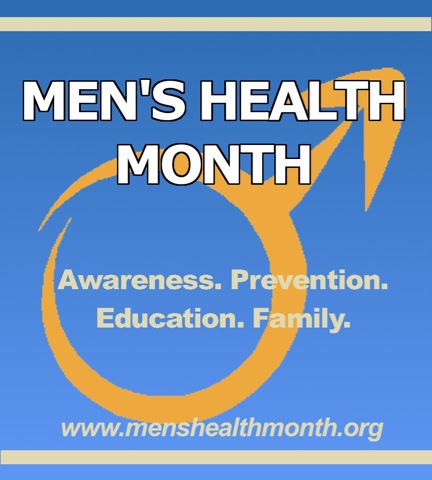 Traditionally in the month of June, we celebrate Father’s Day on the third Sunday. Father’s Day is intended to be a day set aside to recognize, honor, and appreciate the father figure in our life. Did you know that June is also Men’s Health Month? Men’s Health Month is designed to bring awareness to health issues that impact both men and boys. We all know that proper diet and exercise are imperative for good health, but knowledge of family medical history and wellness checkups are equally important. The men in our life need medical screenings that will detect those “silent” ailments such as hypertension, diabetes, and high cholesterol. Screenings will also reveal health issues like colon cancer and heart disease which are treatable when diagnosed early. For more information about men’s health, visit Men’s Health Network website at http://www.menshealthnetwork.org/.
Normally on Father’s Day, we give our father figures gifts that include ties, clothes, sporting goods and tools. This month we encourage you to also initiate dialogue with him about his health. Encourage him to get a physical and request early detection screenings from his medical provider. Also, check out http://www.menshealthmonth.org/thingstodo.html to discover additional things you can do to heighten awareness about men’s health.
“Recognizing and preventing men’s health problems is not just a man’s issue. Because of its impact on wives, mothers, daughters, and sisters, men’s health is truly a family issue.”- Former Congressman Bill Richardson (Congressional Record, H3905-H3906, May 24, 1994)
The Vine Event Planning
www.facebook.com/TheVineEventPlanning
www.twitter.com/TheVineEvents
Everyone is talking about President Obama’s endorsement of marriage equality. We ran across this blog that gives an interesting perspective on gay rights from Huey Newton co-founder of the Black Panther Party that we would like to share with our followers. The words he spoke over 40 years ago is a prophecy of where we are now…
This was a speech given August 15 1970 by Huey Newton co-founder of the Black Panther Party..here he addresses the issue of Gay Rights… Its serious food for thought coming in the aftermath of President Obama endorsing Same-sex Message…
During the past few years strong movements have developed among women and among homosexuals seeking their liberation. There has been some
uncertainty about how to relate to these movements.
Whatever your personal opinions and your insecurities about
homosexuality and the various liberation movements among homosexuals
and women (and I speak of the homosexuals and women as oppressed
groups), we should try to unite with them in a revolutionary fashion.
I say ” whatever your insecurities are” because as we very well know,
sometimes our first instinct is to want to hit a homosexual in the
mouth, and want a woman to be quiet. We want to hit a homosexual in
View original post 862 more words


 The Vine Events